


News
-
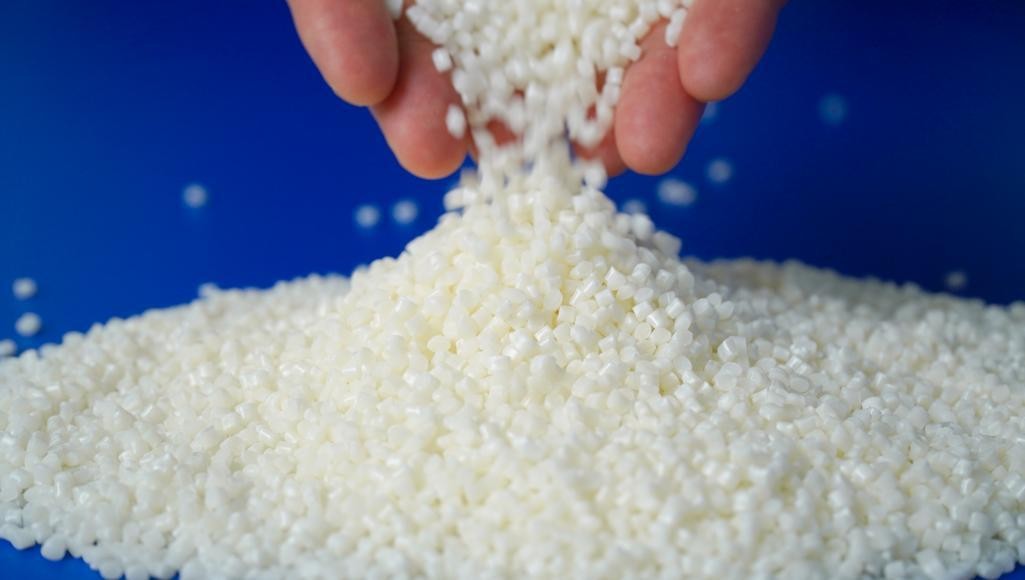
Permanent Shutdown: 230 KT PP Plant Ceases Operation; Mass‑Scale European Capacity Exit; PC Down RMB 200/MT, PP Down RMB 100/MT
Permanent Shutdown of 230 KT PP Plant amid Large‑Scale European Capacity Retreat On October 17, LyondellBasell officially shut down its PP2 plant at the Brindisi site in Italy. Commissioned in 1982, this ageing facility boasts an annual capacity of 230,000 tonnes. It represents the world’s first industrial‑scale PP production line adopting the Spheripol process and carries special historical significance within the polyolefin sector. The root cause of the shutdown lies in broken industrial‑chain supporting infrastructure. The Brindisi site is not equipped with its own cracker unit and has long relied on propylene feedstock supplied by Eni’s Versalis facilities in the same region. Eni permanently closed its cracking unit in April 2025. Since then, the PP plant had to source feedstock via... -
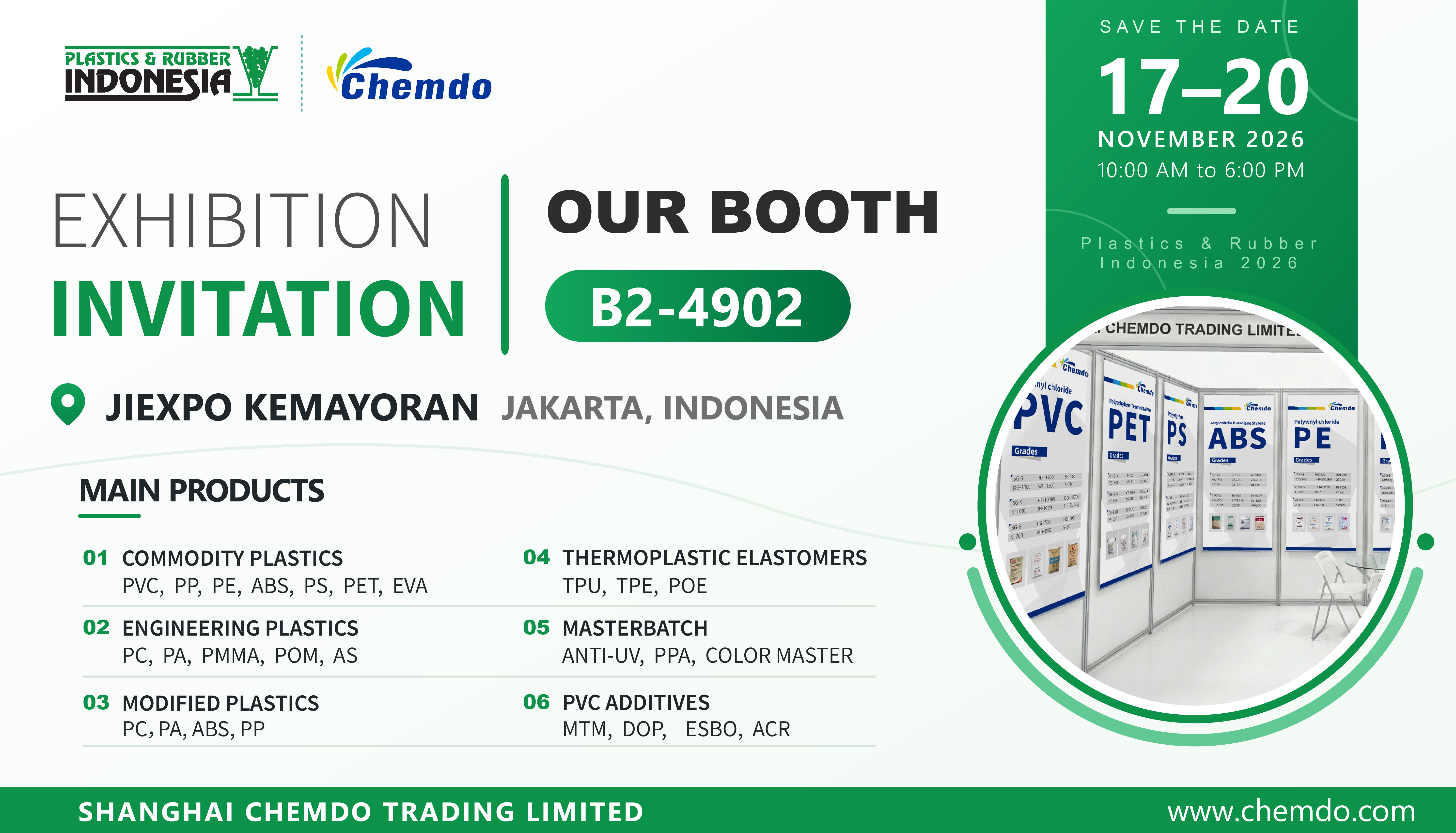
Exhibition Invitation: Meet Chemdo at Plastics & Rubber Indonesia 2026
Chemdo sincerely invites you to visit our booth at the 37th International Plastics & Rubber Machinery, Processing & Materials Exhibition, Plastics & Rubber Indonesia 2026. Date: 17–20 November 2026, 10:00 – 18:00 Venue: Jiexpo Kemayoran, Jakarta, Indonesia Our Booth: B2-4902 Chemdo Trading Limited will showcase a full range of plastic materials: Commodity Plastics: PVC, PP, PE, ABS, PS, PET, EVA Engineering Plastics: PC, PA, PMMA, POM, AS Modified Plastics: PC, PA, ABS, PP Thermoplastic Elastomers: TPU, TPE, POE Masterbatch: Anti-UV, PPA, Color Master PVC Additives: MTM, DOP, ESBO, ACR We look forward to face-to-face discussions and business cooperation with global partners and customers. Welcome to visit us at Boot... -
Latest Plant Updates for ABS and PS (October)
For the week ending October 15, the operating rate of the domestic ABS sector stood at approximately 54.6%, down more than 1 percentage point week‑on‑week. Half of ABS producers have reduced their operating loads. Specifically, Yulong Petrochemical’s operating rate fell below 20%. Hengli Petrochemical has been under planned maintenance since April. Rongsheng Petrochemical cut its operating load to 35%. Many normally high‑capacity major producers are running at merely 40‑50% capacity. LG also reduced output at its two domestic plants in October. Only Liaoning Kingfa Technology maintained full‑capacity production. For the week ending October 15, the operating rate of the PS industry was around 35.5%, dropping about 1.7 percentage points week‑on‑week. Widespread plant shutdowns have hit th... -
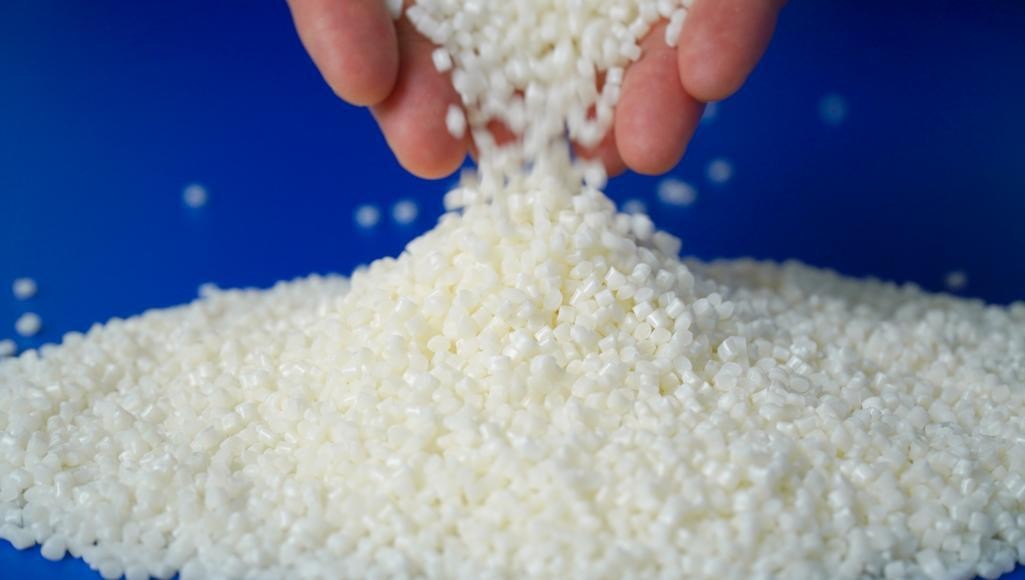
New Trade Barriers Hit PE, PP and PET Exports as Brazil and Vietnam Roll Out New Measures; Divergent Market Moves: PA Rises up to RMB 300/ton, POM Plunges RMB 500/ton
Brazil and Vietnam Introduce New Restrictions, Creating Headwinds for PE, PP and PET Exports Chinese plastic raw‑material exports have encountered fresh trade barriers this week. Brazil’s Foreign Trade Chamber issued a resolution to temporarily raise import tariffs for 28 categories of chemical products, with most tariff rates increased to 20 %. The measure will take effect on October 17 for a 12‑month validity period. Affected plastic grades include LDPE (low‑density polyethylene), HDPE (high‑density polyethylene), unfilled polypropylene and PET. In the absence of a China‑Brazil free‑trade agreement, Chinese exports will be subject to the new tariff rates, significantly eroding their price competitiveness in the Brazilian market. On October 13, Vietnam’s Ministry of Industry and Trade ... -
Breaking: LG Chem Restarts NCC Unit After Six‑Month Shutdown; BASF Starts Up North‑American MDI Expansion. POM Rises Up to RMB 500, PA Gains RMB 200
LG Chem Restarts Yeosu No.2 NCC Following Six‑Month Outage LG Chem’s 900 000‑tonne‑per‑annum Yeosu No.2 Naphtha Cracking Center (NCC No.2), which had been offline since March 23, restarted on October 12, as disclosed in the company’s regulatory filing dated October 8. Generating annual sales of 2.49 trillion South Korean won, the facility accounts for 5.09 % of the group’s total revenue. LG Chem noted it will ramp up operations quickly once feedstock supply stabilises to minimise disruptions to production and sales. As a critical upstream supply hub for the polyolefin chain, the unit was forced to shut down amid naphtha supply disruptions stemming from US‑Iran conflicts. It produces roughly 800 000 tonnes of ethylene and 400 000 tonnes of propylene per year via high‑temperature naphtha ... -
Breaking News: German PVC Plant Shuts Down Amid Sky‑High Power Prices; Westlake Takes $200‑Million Write‑Down. Plastic Prices Set to Rise? ABS Jumps Up to RMB 400, PA RMB 300
High Electricity Costs Force Permanent Closure of Age‑Old German PVC Plant; Westlake Books $205‑Million Pre‑Tax Charge. On September 29, 2026, US chemical giant Westlake Corporation issued an announcement confirming the permanent shutdown of its polyvinyl chloride (PVC) facility in Cologne, Germany. Full production operations are expected to cease by Q1 2027. The Cologne plant boasts an annual PVC capacity of 165 000 tonnes, with around 120 on‑site shop‑floor employees affected. The company will record a total pre‑tax charge of approximately USD 205 million, comprising roughly USD 100 million in cash restructuring costs and USD 105 million in non‑cash fixed‑asset impairment. These charges will be recognised across the 2026 and 2027 financial statements. This move is not an isolated case... -
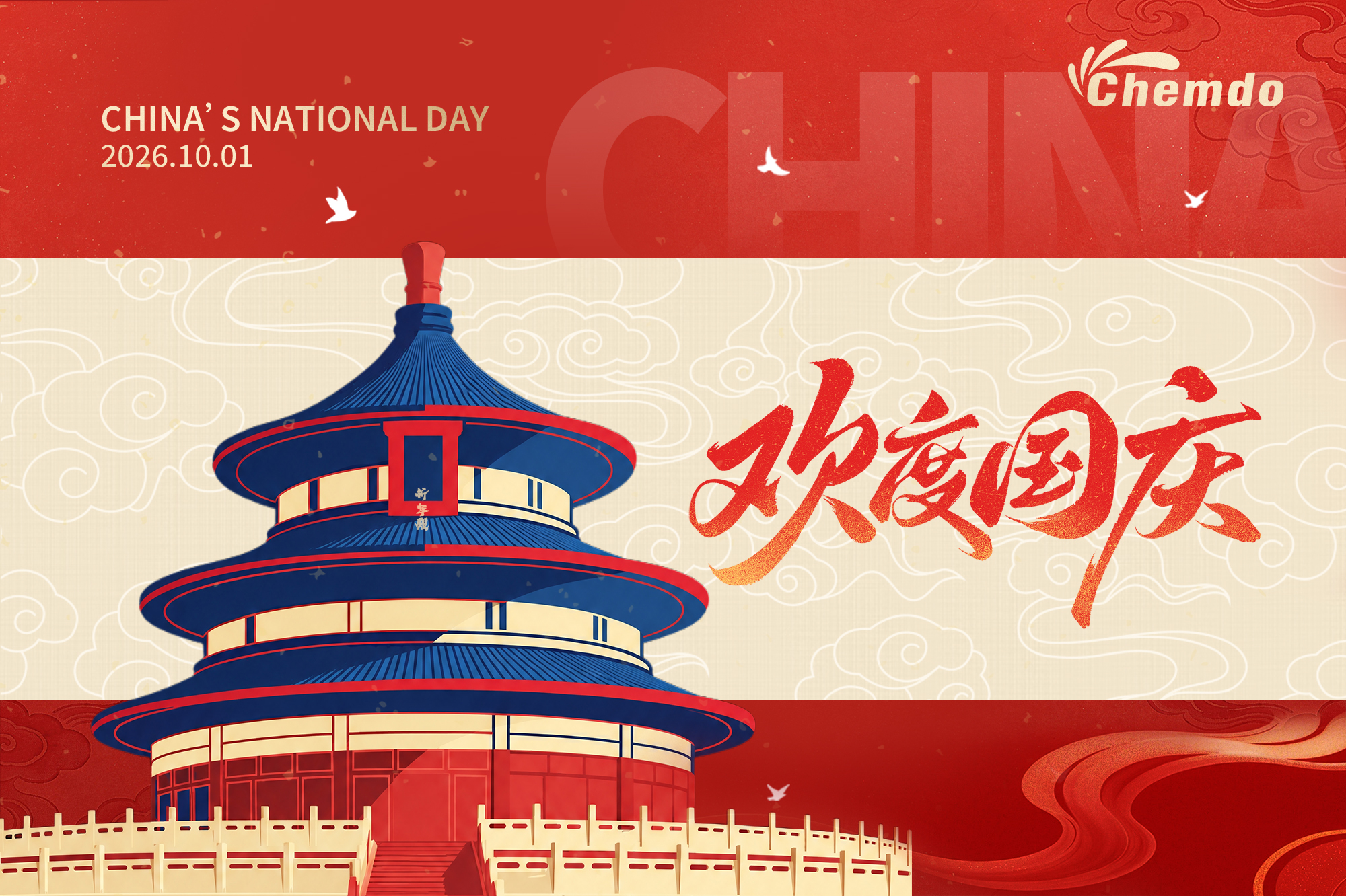
Celebrate China’s National Day
October 1, 2026 On this special occasion of China’s National Day, Chemdo extends sincere greetings and best wishes to all our partners and friends around the world. May our motherland enjoy prosperity and peace. Chemdo will keep moving forward, sticking to our mission and providing quality products and services for global customers. Wish you a happy National Day! -
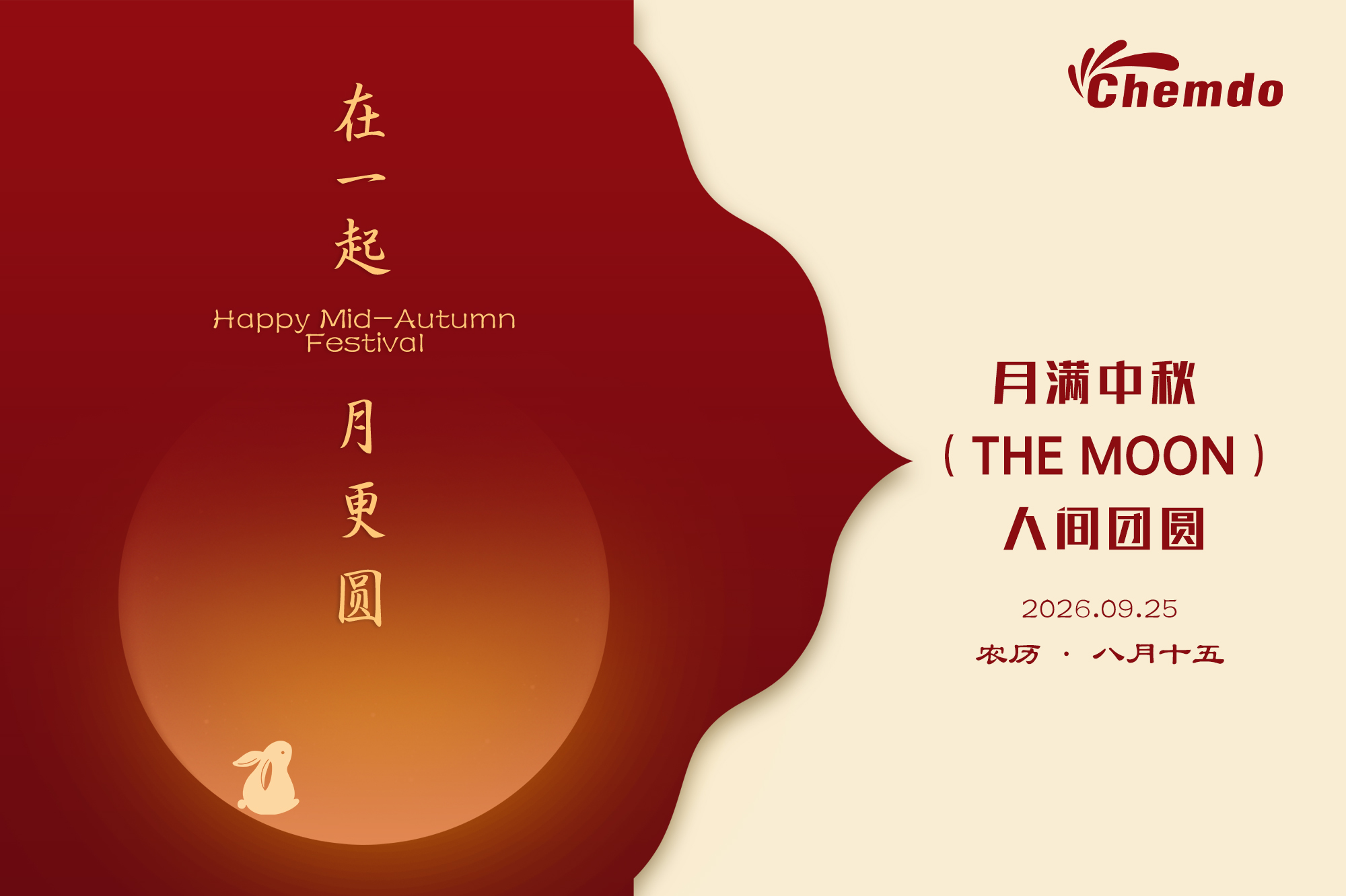
Full Moon for Reunion | Chemdo Wishes You a Happy Mid-Autumn Festival
The bright full moon carries the wish for reunion. Together, we achieve greater fulfillment. As the 2026 Mid-Autumn Festival approaches, Chemdo extends sincere holiday greetings to all our clients, partners and team members worldwide. Thank you for your trust and continuous partnership. We look forward to working hand in hand for mutual success. May you and your family enjoy peace, happiness and prosperity. -
Broad‑based Price Hikes! BASF, Huntsman and Wanhua Chemical Announce Synchronous Price Increases; Major Move: Saudi Aramco Proposes Divestment of Arlanxeo; ABS Posts RMB 200/ton Drop Today
BASF, Huntsman and Wanhua Chemical Implement Synchronous Price Hikes! On September 11, BASF announced immediate price increases for its Lupranate® MDI (methylene diphenyl diisocyanate) base products and Lupranate® TDI (toluene diisocyanate) in ASEAN and South Asian countries, with a rise of USD 250 per metric ton (equivalent to approximately RMB 1,676 per metric ton). Market sources disclosed that Wanhua Chemical raised its product prices for Southeast Asia and South Asia effective September 14, 2026 in response to recent market shifts and persistent increases in raw‑material, energy and supply‑chain costs: MDI up by USD 300/MT; TDI up by USD 300/MT; polyether polyols up by USD 400/MT. Huntsman will increase prices for all MDI products across Europe, the Middle East, Africa and India (... -
Breaking News: Middle‑East Emergency: Saudi Pipeline Shutdown to Last 3‑5 Weeks; Oil Prices Surpass USD 105/bbl; World’s First 10,000‑ton‑scale H‑POE Unit Achieves Successful Startup; POM Jumps Up ...
Major Middle‑East Development: Saudi Pipeline Outage Expected to Last 3‑5 Weeks; Crude Oil Tops USD 105 per Barrel U.S. WTI front‑month futures closed 4.03 % higher at USD 105.48 per barrel, while Brent crude futures rose 2.65 % to settle at USD 108.48 per barrel. Following a drone‑attack‑induced shutdown of Saudi Arabia’s East‑West crude‑oil pipeline, Saudi Arabia has delayed some oil supplies to European customers. Meanwhile, oilfields in Libya have halted production amid protests. Risks on the global crude‑oil supply side have risen markedly, and tight physical‑market conditions have underpinned the oil‑price rally. Stakeholder reports indicate the approximately 1,200‑km Saudi East‑West Pipeline boasts a maximum designed throughput capacity of 7 million barrels per day, serving as a ... -
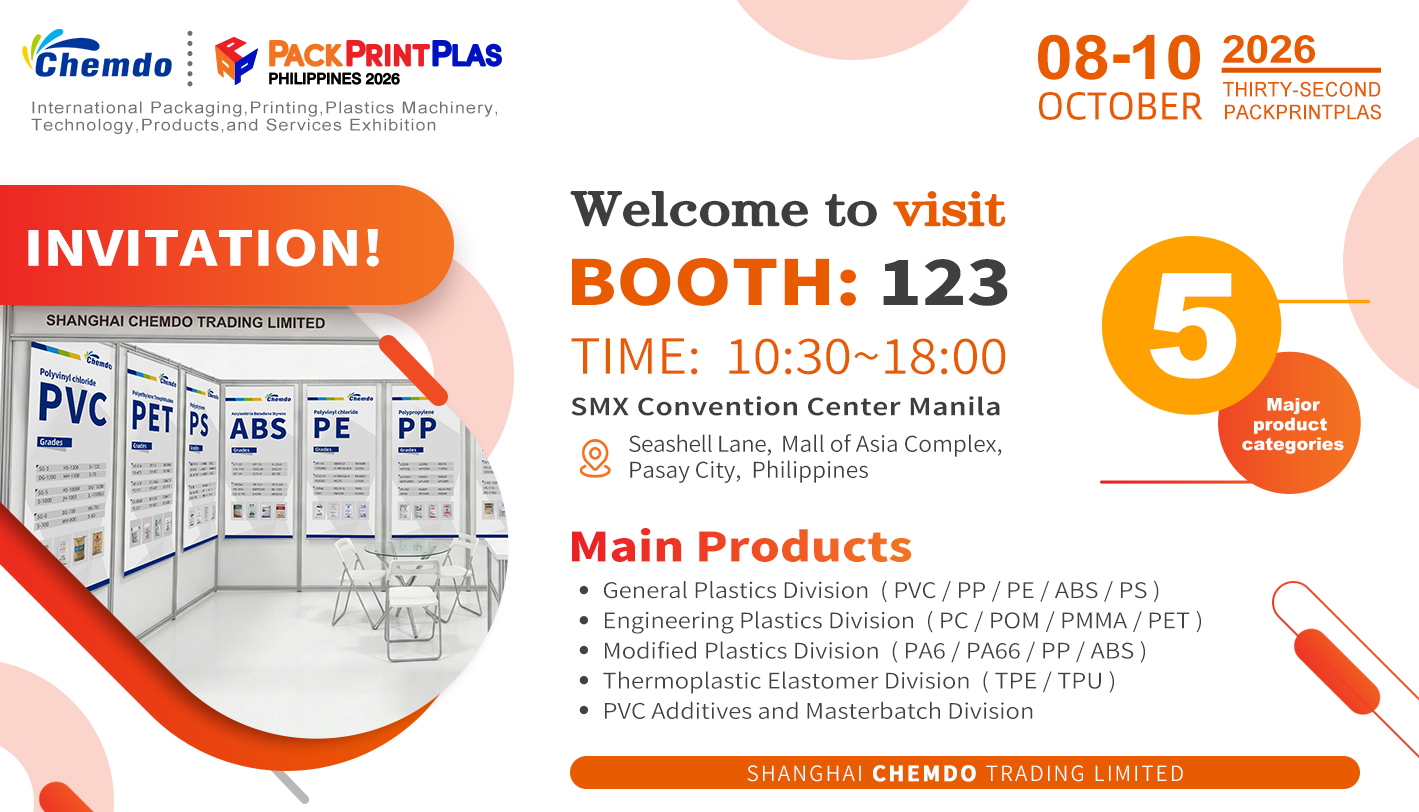
Chemdo | PACKPRINTPLAS PHILIPPINES 2026 Exhibition Invitation
Exhibition Name: PACKPRINTPLAS PHILIPPINES 2026 (32nd PACKPRINTPLAS) Date: October 08–10, 2026 Booth No.: 123 Opening Hours: 10:30 – 18:00 Venue: SMX Convention Center Manila, Seashell Lane, Mall of Asia Complex, Pasay City, Philippines Company: Shanghai Chemdo Trading Limited Main Product Lines: General Plastics: PVC / PP / PE / ABS / PS Engineering Plastics: PC / POM / PMMA / PET Modified Plastics: PA6 / PA66 / PP / ABS Thermoplastic Elastomers: TPE / TPU PVC Additives & Masterbatch We sincerely welcome you to visit our booth! -

All‑round Price Surge! ABS & PA Jump Sharply, Up to RMB 700/ton Today; PC Gains RMB 500/ton. Lotte Chemical Announces Indefinite Shutdown!
Indefinite Production Halt! 1.1‑million‑ton‑per‑annum Ethylene Unit Closed, Associated Butadiene Unit Taken Off‑Stream Simultaneously On September 3, Lotte Chemical’s naphtha steam cracker (NCC) at the Daesan Industrial Complex in South Korea entered indefinite shutdown, with its supporting butadiene extraction unit ceasing operation at the same time. The facility features a designed annual ethylene capacity of 1.1 million tonnes. This shutdown marks the transition of South Korea’s “Daesan‑No.1” petrochemical industrial restructuring project from the approval phase to actual implementation. According to overseas industry media reports, under the restructuring blueprint, Lotte Chemical will divest assets at its Daesan plant and integrate with HD Hyundai Chemical to form a joint‑venture e...