


Reuters reported that ZapSibNeftekhim, a petrochemical complex owned by Russia’s largest petrochemical firm SIBUR, suffered severe damage in a drone attack on August 10 and has suspended operations indefinitely.
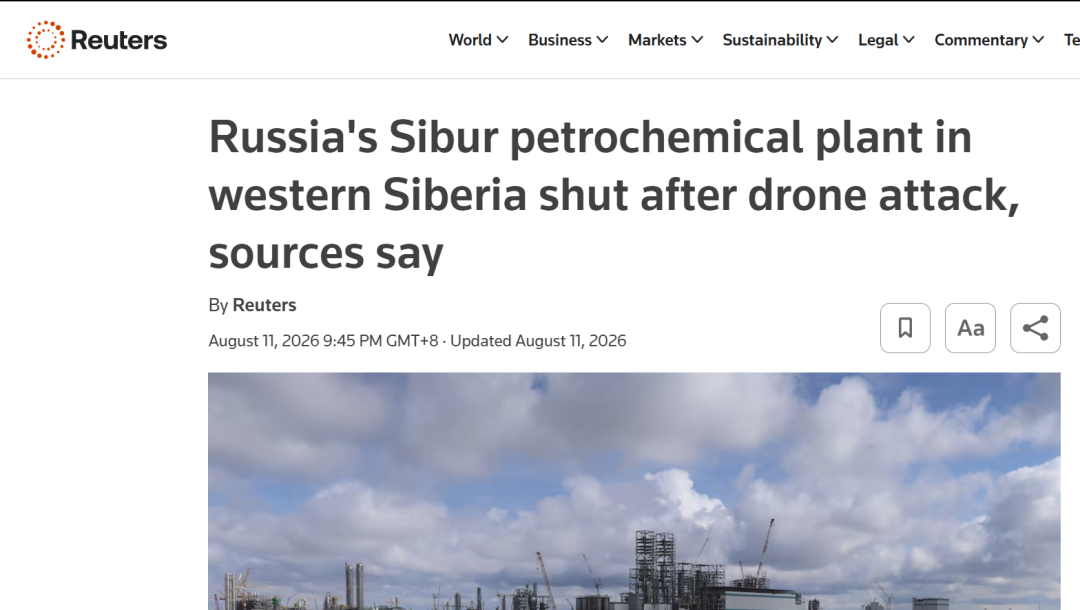
The facility produces around 6 million metric tons of liquefied petroleum gas (LPG) per annum, accounting for 40% of Russia’s total LPG output. Roughly half of its LPG output is used as feedstock for its downstream petrochemical units.
In addition, the complex boasts an annual base polymer capacity of 2.5 million metric tons, consisting of 1.5 million tons of polyethylene (PE) and 1 million tons of polypropylene (PP). It ranks among Russia’s largest polyolefin production hubs.
ZapSibNeftekhim operates a highly integrated deep-processing chain covering upstream LPG production and downstream polymer manufacturing. A prolonged shutdown will create supply pressures across the entire industrial chain, including LPG production, cracking processes and polymer production. The supply crunch will extend far beyond fuel feedstocks to polyethylene and polypropylene supplies.
For China’s plastics and chemical market, Russia is not a major supplier of PE and PP imports, so the direct impact remains limited. Nevertheless, an extended outage will tighten global PE and PP supply balances, potentially lifting international benchmark prices and indirectly pushing up China’s import costs while altering export competitiveness.
Post time: Aug-14-2026